
Every season, Jesolo tells a story through its numbers. Overnight stays, tourist arrivals, hotel occupancy rates: figures that primarily speak of tourism, but not exclusively. They reflect the health of the territory, its ability to attract people, and the direction it is heading. Halfway through 2026, the early data of the season allows for a partial assessment, offering useful indications of how the summer will end. We have gathered and put them into perspective to understand what they truly mean for those who view Jesolo not just as a holiday destination, but as a place to build something lasting.
A Summer Starting with Encouraging Numbers
The national picture is positive. According to estimates by the JFC Observatory for Seaside Destinations, the summer of 2026 will bring nearly 407 million overall overnight stays to Italian coastal towns—a 4.8% increase over the previous season—generating an estimated turnover of €33.7 billion for the seaside tourism sector. International growth is driven primarily by the German, French, Swiss, and Austrian markets.
Jesolo fits squarely into this trend. H-Benchmark data compiled for the Jesolo Hoteliers Association shows a consolidated occupancy rate of 52.9% for the period between April 1st and May 28th, reflecting a 5.3 percentage point increase compared to the same period in 2025 (+11.1%). During holiday weekends, such as the June 2nd holiday, average occupancy reached 81.2%, peaking at 90% on Saturday and 88% on Sunday.
The return of international tourism confirms this positive outlook: according to the G20S, seaside destinations in Italy saw a 4% to 6% increase in overnight stays between May and June compared to 2025, driven in particular by foreign visitors returning to Italian shores. Months traditionally considered off-peak also confirm this trend: in February, Jesolo recorded over 44,000 overnight stays—a 16.57% increase compared to the previous year—a sign that the city is expanding its seasonality well beyond the summer months, thanks in part to New urban districts of excellence.
Jesolo in the Context of Italian Seaside Destinations
However, an honest review cannot ignore one key figure: in the 2026 “Top Destinations” ranking drawn up by the JFC Observatory, Rimini overtook Jesolo for the top spot due to a better balance of quality offerings, services, and overall attractiveness, with Riccione taking third place on the podium.Un bilancio onesto, però, non può ignorare un dato: nella classifica 2026 delle “Destinazioni Top” stilata dall’Osservatorio JFC, Rimini ha superato Jesolo al primo posto per miglior equilibrio tra qualità dell’offerta, servizi e attrattività, con Riccione al terzo gradino del podio.
This is not negative news; rather, it indicates just how competitive the offerings of Italian seaside resorts have become in recent years. Jesolo remains one of the benchmark destinations for Adriatic tourism, boasting absolute numbers of stays among the highest in Italy and a steady growth trend confirmed season after season, both during peak summer and shoulder months.
The Municipality Invests in the City’s Future
Alongside tourism data, a second element reveals the direction Jesolo is taking: public investment. The local municipal administration recently allocated €6 million for public works, maintenance, and strategic design. Of this, €3.5 million is designated for the restyling of the Lido’s commercial gallery—the flagship project of this phase—along with funds for beach nourishment in the Pineta area and the redevelopment of Porto dei Pescatori in Cortellazzo.
This represents only a portion of a broader plan: the 2026–2028 budget forecast approved by the City Council foresees investments of over €26 million in 2026 alone, rising to €35 million in 2027 and over €48 million in 2028. These funds are allocated to road infrastructure, sustainable mobility, urban renewal, and new public spaces, among other projects. Added to these are the EU National Recovery and Resilience Plan (PNRR) funds already secured by the Municipality—over €6 million earmarked for cycle/pedestrian paths, social inclusion, and digital services for citizens.
These figures portray a city that does not limit itself to managing the present, but actively plans its development over a multi-year horizon: a factor that rarely goes unnoticed by those evaluating the area from a long-term perspective, and one that reflects positively on rising real estate values.
Why Regional Growth Speaks to Real Estate Value
Growing tourism and rising public investments are two sides of the same coin: a city that attracts more people while simultaneously investing in itself naturally tends to generate value for property owners as well. This dynamic can be observed in many successful coastal destinations, and Jesolo is no exception.
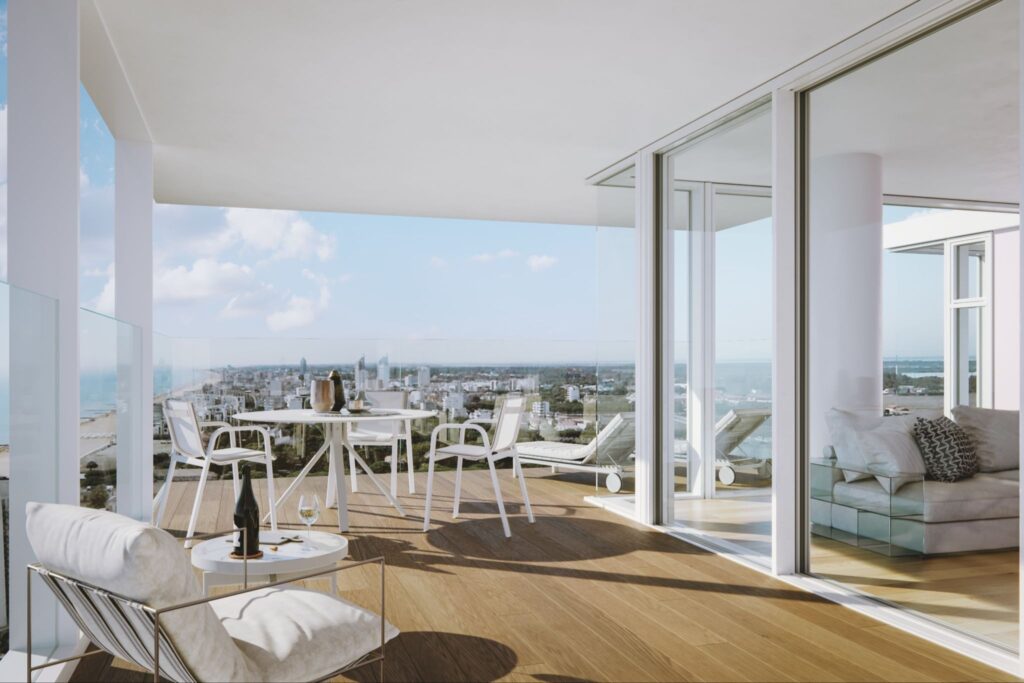
In this context, choosing a residence in the heart of Jesolo Lido means becoming part of a region experiencing tangible—not merely promised—transformation. Contact us to discover the most exclusive real estate opportunities along the coast.